
Archive for the ‘ Featured Destinations ’ Category


Santa Fe “City Different” Walking Tour

Thursday, May 9th, 2013

I recently visited Santa Fe, New Mexico and stayed at the Santa Fe Sage Inn. During my stay I discovered they offer a “City Different” walking tour, which takes visitors to some of the landmark sights around downtown, as well as providing answers to many of those burning Santa Fe questions, for example:

  • Why are all the buildings brown?
  • Why the New Mexico State Capitol is called the “Roundhouse”?
  • Or what’s missing from the St. Francis Cathedral Basilica?
  • And, how/why Santa Fe became one of the top art destinations in the U.S.?

The Santa Fe “City Different” walking tour provides a historical and cultural orientation to the wonders of Santa Fe. The hour and half walking tour begins in the lobby of the Santa Fe Sage Inn each Thursday, Friday and Saturday at 9:45am and runs from early May through October 19th, 2013.


From the Santa Fe Sage Inn it’s just a short ride on the Sage Coach to the New Mexico State Capitol where the tour begins. The tour continues down old Santa Fe Trail, traveling through the historic Barrio de Analco, while viewing the San Miguel Mission and the Loretto Chapel, before arriving at the Santa Fe Plaza. There you will explore historic sites including, the St. Francis Cathedral Basilica and the 109 E. Palace. On the plaza you will learn about the Palace of the Governors, the New Mexico Museum of Art and the distinctive architecture that makes Santa Fe so unique. You’ll also learn about the role of Santa Fe’s three cultures… Native American, Hispanic and Anglo in the development of what is now the “City Different.”. This tour is a great opportunity to learn about the history of the nation’s oldest capital.

For more information on the Santa Fe “City Different” walking tour, contact:

Santa Fe Sage Inn
Phone: 505-982-5952
Email: SageInn@SantaFeSageInn.com
Fee: $12 per person

Why you need to come to Arizona right now!

Monday, April 8th, 2013

The following photos will illustrate ten reasons to visit Arizona in the springeach represents at least one our our five senses, using the local flora as symbolic representations.  Spring is a fantastic time to visit the Arizona Sonoran Desert, with many unique cacti in full bloom, and, a variety of distinct scents and sounds.

Without further ado, here are ten spring reasons that will entice you to visit Arizona right now!

SUNSETS
The sunsets in Arizona are second to none.  This shot of a Joshua Tree in the early stage of the sun setting cycle illustrates a warm amber glow, while other evenings you’ll see rich reds’ streak across the sky. This shot was taking at the Flying E Dude Ranch.  (Sight)
VISTA VIEWS
There are large open spaces to enjoy, where the air is as clean as the sky is brilliant. This shot is just outside Wickenburg, which is about 60 miles N.W. of Phoenix. (Sight)

WILDFLOWERS
Poppies, Marigolds and Evening Primrose litter yards and sides of streets with a palette of vibrant colors.  (Sight, Smell)

INSECTS, BIRDS & WILDLIFE
Wildflowers and blooming cacti herald the arrival of migrating songbirds, butterflies and hummingbirds. There is so much life in the Sonoran Desert during spring months…from butterflies to 100s of species of birds chirping song.  If you’re lucky, you may even see a Gila Monster or other rare reptiles.  (Sight, Sounds)

DESERT HONEY
There is nothing sweeter than some desert honey…from mesquite to cactus blooms, to flavor-infused jalapeño or prickly pear, there are merchants selling the nectar that only Arizona can produce. This shot is of a bee pollinating a Palo Verde Tree. (Taste)

UNIQUE CACTI BLOOMS
There are so many variety of cacti in the Arizona Sonoran Desert, most have unique and splendid springtime blooms.  This photo is a hedgehog cacti. (Sight, Smell)

SEASONAL WATER
There are several areas where you’ll see seasonal water in the desert, and when you do, it’s a sight to behold.  This is the upper Hassayampa River in Yavapai County (Sight, Sound, Touch)

SUNRISES
Second only to Arizona sunsets, are the sunrises.  If you’re an early-bird,  you’ll bear witness to a stupendous sight as a rising glow illuminates the horizon, indicating the beginning of another beautiful day in the desert. (Sight)


NIGHT SKY
Because the sky is often so clear at night, the stars are quite bright against the dark sky.  This is a star-trail shot I took, which is a technique combining hundreds of photos into a single image. (Sight, Feel)

VIBRANT CONTRASTS
The amber light in the morning and evening hours. The bright warm sun in the afternoon, and the diverse textures  of the desert create vibrant contrasts that can only be found in the desert southwest of the Arizona Sonoran Desert.  (Sight)

If you live in, or have ever visited Arizona, please leave a comment below and share with my readers and me your favorite Arizona spring sights. If you enjoyed this post, please share it with friends and family by linking or posting on social media.

Wickenburg, AZ: Where cowboys roam and artists reign

Wednesday, April 3rd, 2013

If you conjure images of the west, generally what emerges in the mind’s eye is horses, open space, clean air and cowboys.  With fewer and fewer areas to enjoy a true western experience, there is one place that has flourished for well over a century…Wickenburg, Arizona.

Wickenburg is a true western town, where the spurs have a job to do and hats are not accessories. The town is full of character, where spirits remain wild and the souls are “western” through and through.

Located about sixty miles northwest of Phoenix, Arizona, Wickenburg is arguably the “west’s most western town.”  150 years ago a man named Henry Wickenburg came to the area in search of gold, he was fortunate enough to find it at the Vulture Goldmine, which helped the community become the third largest town in Arizona during its heyday.  2013 marks Wickenburg’s sesquicentennial, 150 years since Mr. Wickenburg first came to the area, making it the 2nd oldest town in the state north of Tucson.


Over the years Wickenburg has been able to maintain its roots as a western town, one that continues to embrace the cowboy lifestyle.  Visitors will enjoy a plethora of activities, from dude ranches, lush golf courses, shopping, horseback riding, hiking, arts & culture to exploring those great outdoors.

Here are my top-10 suggestions of things to do while in Wickenburg:

  • Stroll downtown and enjoy the various sculptures with audio narration and historic buildings. Stop by the Chamber of Commerce, which is located in the old Santa Fe train depot, and pick up info on the various Wickenburg activities.
  • Visit the Desert Caballeros Western Museum for an impressive collection of Western artifacts and Southwestern art.
  • Hike to the top of Vulture Peak, an iconic sight in Wickenburg. The 360 degree desert views are simply spectacular!
  • Check out the Hassayampa River Preserve, a lush riparian area where the normally underground river rises above ground. There are many trails and great places to enjoy a picnic.
  • Enjoy a concert or theatrical presentation at the Del E. Webb Center for the Performing Arts.
  • No visit to Wickenburg would be complete without a Dude Ranch experience. There are several guest ranches in the area where you can ride horses, rope cattle, square dance or enjoy a camp fire as a famous southwestern sunset fills the sky with color.
  • Take a Jeep tour of the area…see abandoned mines, get a history lesson, and enjoy the diverse landscape.
  • Peruse the local shops and galleries to get a real sense of the western flair in the community.
  • If you’re like me and you enjoy golf, don’t miss either of the two courses in town…the Wickenburg Country Club and Los Caballeros Golf Club.
  • If you really want to know what it was like back in the gold rush days, give the folks at Miner’s Creek a call for a gold panning experience in which you get to keep everything you find.

For more information on the area, visit the  Wickenburg Chamber of Commerce website.

Click the following link to see more pictures of Wickenburg.  If you’ve ever been to Wickenburg, please leave a comment below and share your favorite activities.

Charlottesville Market

Wednesday, March 13th, 2013

While I was in Charlottesville, Virginia I had an opportunity to get a firsthand tour of the weekly Charlottesville Market (aka C’Ville Market) with one of the local chefs. Each Saturday, April through December, this vibrant community coalesces on downtown Charlottesville.  Farmers and vendors alike bring their fresh produce, herbs, plants, grass fed meats, baked goods and more, for locals and culinary professionals to peruse.

Unlike many farmers’ markets today where venders are allowed to sell just about anything,  the Charlottesville Market upholds strict standards, assuring that all of the products sold are grown, made or produced locally. The market features over 100 vendors and includes a handful of street performers.  The C’Ville Market is located on the corner of Water & South Streets, right next to the Downtown Mall.


With its fertile land, and over 200 restaurants, Charlottesville is at the center of the culinary food scene, with many of the chefs and restaurants receiving national recognition.  One of the contributing factors for the area’s culinary success is the ability to access a huge variety of locally grown and cultivated goods at the Charlottesville market.

Charlottesville chefs have really embraced the farm-to-fork movement, so you’ll often find them shopping at the Saturday morning C’Ville market. Click the following link to find what I think are the five best restaurants in Charlottesville. Or, click the following for a laundry list of great Charlottesville restaurants.

Charlottesville Market Hours:

April – October:  Saturday 7 am – 12 noon
November – December: Saturday  8 am – 1 pm

If you’ve ever been to the Charlottesville Market, please leave a comment below and let me know what you enjoy most.

[Video] Niagara Falls by land, water & air

Thursday, March 7th, 2013

Niagara Falls is one of those iconic natural wonder sights that nearly all of us have on our  bucket list, including myself. This past summer I was finally able to check it off during my time on the Rand McNally and USA Today’s, “Best of the Road.” The nearby town of Lewiston was vying for “Best Food” in small town America. We arrived in the area a day early so we could do a bit of exploring around the famed Niagara Falls—let me tell you, it did not disappoint. I do, however, have to leave Niagara on my bucket list because I want to go again…next time it will be in the winter.  From the pictures I’ve seen, it looks completely transformed from the summer months, giving visitors a whole new experience.

Niagara Falls State Park is quite expansive, so if you go, be sure to bring your walking shoes as there are more than 400 acres to explore. Niagara is the nation’s oldest state park (1885), and while scores of visitors will enjoy the powerful and awe-inspiring sight of the Falls, that’s just part of he experience. Niagara Falls State Park is home to lush terrain and protected wildlife with over 15 miles of hiking trails to explore, as well as a host of attractions.


Here are some of the Niagara highlights I experienced:

  • Niagara Scenic Trolley Rides – Tired of walking, hop on the trolley for a wonderful tour of the park.
  • Niagara Cave of the Winds Tour – Take an elevator ride to the bottom of the falls for a whole new vantage point. Don’t miss “hurricane ridge” while you’re there.
  • Maid of the Mist – This boat ride will get you up-close and personal with the falls…an unforgettable experience.
  • Niagara Discovery Center Hiking Trails – The Discovery Center features miles of Niagara Falls hiking trails, plus hands-on interactive displays and a 180° multi-screen theater experience.
  • Niagara Whirlpool Jet-Boat Ride – This is an activity that will get the adrenaline going!  Travel up the Niagara River in a custom built jet-boat and experience the excitement of going through class 5 rapids—then, gain speeds up to 60mph while doing a 360 turn in the middle of the river.

Niagara Falls is actually a series of three waterfalls that straddle the international border between Canada and the U.S.  Before visiting, I had no idea there was more than a single waterfall.  As a matter of fact, it wasn’t until I took a Rainbow Air helicopter ride and got a bird’s eye view that I learned of the other falls. Getting an aerial view of Niagara really puts the grandeur into perspective.

If you’ve been to Niagara Falls before, please leave a comment below and share your experience with my readers and me. Click the following link to see more pictures of Niagara Falls. If you enjoyed this post and video, please share it with friends and family. If you really liked it, you can help support the content by buying me a cup-a-joe…your support is much appreciated.

Kartchner Caverns: Still growing after 200,000 years

Tuesday, February 26th, 2013

Arizona is a wondrous state for its diverse, natural and awe-inspiring beauty.  Everyone is familiar with the state’s most popular tourist sights, from the Grand Canyon, Sedona’s red rock country to the Saguaro National Park. However, there’s one sight that may not be familiar to you: A state park located about an hour south of Tucson…Kartchner Caverns.

Kartchner Caverns is one of the largest and most well-preserved living caves in the country…if not the world.  If you’ve never been inside a cave before, this is the one you must see.  Painstaking effort not only went into preserving the cave for generations to come, but also for making it the most comfortable cave for tourists to explore.  Paved trails run throughout the cave system, making it easy for folks of all ages and abilities to explore.

Your tour guide will explain the difference between stalactites and stalagmites, while giving you geologic and historic information.  While the cave is estimated to be 200,000 years old, it was not discovered until 1974 when two cavers were exploring the limestone hills at the base of the Whetsone Mountains. The Cavers (Gary Tenen and Randy Tufts) spent the next few years making trips back to their discovery to further explore the depths of the cave. It wasn’t until many years later that they shared their findings with the owners of the land. All involved decided the best way to preserve the site was to contact the state of Arizona and pitch the idea of creating a park. It took many more years of planning and meticulous construction efforts before the park would eventually open to the public in 1999.

In order to maintain the integrity of the cave’s ecosystem, only a limited number of visitors are allowed to tour the cave, so advanced reservations are required. I was living in Arizona when Kartchner first opened and remember the intense tour demand…if I recall correctly there was nearly a six month waiting period.  I was lucky enough to see the caverns in the early days as I had a friend whose cousin was a ranger at the park.  It’s been over a decade since I last visited Kartchner, since then it has expanded, now offering two tours in different parts of the cave.  Your first option is the Rotunda/Throne tour, which lasts 90 minutes. The second is a 105 minute tour of the “Big Room.” Both tours are equally interesting, but if you have to choose only one, I’d go with the Rotunda/Throne. Prices and additional info are below.

If you have been in the depths of a cave before, most likely it’s been cool inside, Kartchner is different…it’s warm, muggy and a constant 69.5 degrees (summer or winter).  As you tour the cave, you are left awestruck by the wonderment of this natural beauty. The Throne Room contains the world’s longest soda straw stalactite at over 21 feet.  The Big Room contains the world’s most extensive formation of brushite moonmilk and is closed from April 15 to October 15 each year because it’s a nursery roost for over 1,000 cave bats.


Kartchner Caverns is one of those unique sights that is certainly worth a visit, especially if you’ve never been to a cave before.   If you’ve ever been to Kartchner, please leave a comment below and share your experience with my readers and me.

Kartchner Caverns State Park Information:

Kartchner Caverns map:
Kartchner Caverns SP
Benson, AZ 85602

Phone:
(520) 586-4100
Website:
Karchner Caverns State Park
Admission:
$22.95 Adults/$12.95 kids 7-13/Kids under 7 are free

Olympic Peninsula Road Trip Map

Friday, February 8th, 2013

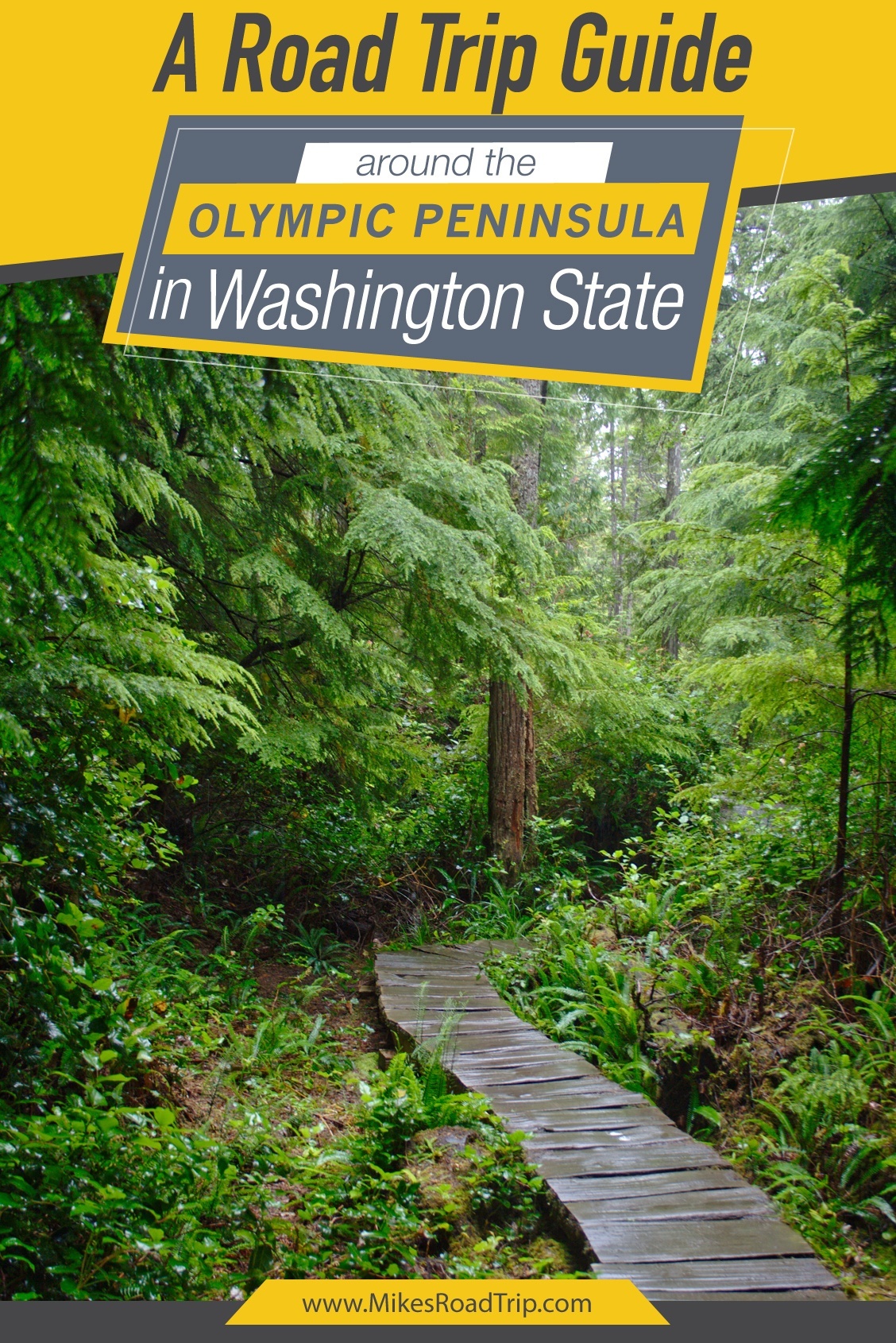
Your complete road trip guide to the Olympic Peninsula in Washington state

You don’t have to drive the full 300+ mile loop around the Olympic Peninsula, but if you do you’ll see picturesque shoreline, waterfalls, pristine lakes, mountain views and even a rainforest.

Start your trip with a ferry ride from downtown Seattle (which is located just below the famed Pike Place Market).  As soon as the ferry leaves the docks, so too will your anxiety after enduring the Seattle traffic.  As you disembark onto Bainbridge Island, you’ll immediately feel a sense of serenity.  Tall pine trees and winding scenic roads await.  Your first destination is the Norwegian town of Poulsbo, where your first stop has to be the world famous (no really, it is) Sluys Bakery for some apple strudel.  Take a stroll and enjoy the quaint shops and seaside views.  If it’s lunch or dinner time, check out Mor Mor Bistro, which serves up northwestern cuisine in a lovely setting in the heart of town.

Head west on 305, then north on Hwy 104 toward Port Gamble, or what I like to call, “Pleasantville.” Be sure to stop by the General Store (trust me, it’s cool) or one of the fresh produce stands.  Hwy 104 meanders north, then turns into 101 west where you’ll head to the town of Sequim. Depending on how much time you have, there are a number of activities indicated on the Google Map below.  You’ll also see that I recommend a couple very nice B&B’s, one of which won “Best Inn” on my “2011 Best of” list.  Staying in Sequim makes for the perfect home base to see the rest of the sights on this Olympic Peninsula road trip. Make reservations at George Washington Inn or Colette’s for the next couple of days…both are located on a cliff overlooking the Strait of Juan de Fuca and are fantastic lodging choices.

After a relaxing evening, the next stop is a hike down to the Dungeness Spit.  If you time it right and are adventurous, make the 11-mile (round trip) trek to the lighthouse located at the tip of the spit. Take a backpack with provisions along with a packable hammock.  An additional stop, or in lieu of the Dungeness Spit hike, is a stop at the Railroad Bridge Park (aka: Dungeness River Audubon center).  Also nearby is a drive straight up the Olympic Mountains to Hurricane Ridge, where on a clear day you can see Vancouver Island. You can simply enjoy the views, or, there are a number of hikes to glacier lakes, rivers and streams.

Time to wind down for the evening…try one of these local eateries:  Alder Wood Bistro, Sawadee Thai Cuisine, Michael’s, Smugglers Landing for good fish & chips, and Toga’s for an outstanding lunch.

The next day there are several forks in the road––if you want to go on a hike through a spectacular rain forest, head to Sol Duc in the Olympic National Forest.  For a scenic and historic drive, peruse by Lake Crescent for awe-inspiring views of the massive body of clear blue water.  While in the area, stop by Lake Crescent Lodge for a history lesson, or, a leisurely walk to Marymere Falls.  If you’ve sufficiently enjoyed your drive by the lake, continue west along Hwy 112 to the most northwesterly point in the contiguous U.S., Cape Flattery.  This is a wonderful stroll through a rain forest, where you’ll come upon a cliff with all kinds of unique and wonderful vantage points, including a small island with a lighthouse.  If you want to explore the area further, and enjoy camping, I have a spot for you!  Click here for Google Map of the most perfect, somewhat secluded camp spot right on the beach.  If the weather is nice, don’t pass this up…there is no one around and the morning walk on the beach when the tide is out is a memory you’ll never forget.

Click the following link to see an array of pictures from the Pacific Northwest.

In recent years the Olympic Peninsula has become well known as the setting (Forks) for the popular Twilight books and movies. Whether you come to the area for fascination or inspiration, you’ll enjoy this scenic and diverse road trip––no other place in America can match its diversity in terrain and weather in such a small geographic area..  From mountain views, strolls along the beach, waterfalls, outstanding lodging, to rain forest hikes, a road trip to the Olympic Peninsula is not to be missed.


View Olympic Peninsula Map for a Road Trip in a larger map

Notes: This is the Pacific Northwest, so you do need to plan for rain, however during the summer months good weather is on your side. As a matter of fact, few travelers probably know that the far northern half of this region benefits from a “rain shadow,” often benefiting from more sunny days with milder temperatures than Seattle. Best months to visit are August, September and often the first half of October.

If you’ve been on a road trip to the Olympic Peninsula, or you have any questions, please leave a comment below, I’d love to hear from you.

Wickenburg Train Depot

Wednesday, January 23rd, 2013

The Wickenburg, Arizona railroad station serves as the headquarters for the Wickenburg Chamber of Commerce, and is among the oldest of the Santa Fe’s wooden stations in Arizona. It continues to remain near its original configuration and is one of the few such surviving examples of “Wild West” railroad architecture.

In 1995, Wickenburg celebrated the one hundred year anniversary of its railroad depot (which was dedicated on July 29, 1895). The Wickenburg depot saw its last passenger service in May of 1969 when the Santa Fe Railroad Company discontinued the daily Super Chief train running between Phoenix and Williams, Arizona.

Best of 2012

Monday, January 14th, 2013

This is the third annual Mike’s Road Trip “Best Of” list. As usual, there were a lot of worthy contenders. While I’m sorry some did not make it, I’m confident I’ve chosen the best-of-the-best. Click on any of the links below to be taken to posts, pictures and/or videos of my experience.

I spent more than eight months on the road in 2012, including an epic coast-to-coast trip as part of the Rand McNally and USA Today’s “Best of the Road.”  As always, I had some amazing experiences that are fun to relive in a compilation “Best Of” list.

To all the “winners,” congratulations! Your dedication and commitment to excellence have caught the eye of this discerning travel writer and video blogger. If you have not been contacted, please email me for your “Mike’s Road Trip “Best of’” icon to display on your website and social media profiles.

LODGING CATEGORY

  • Best Bed & Breakfast Winner: Cameo Heights Mansion in Tuchet, Washington – Opulent, luxurious, romantic, amazing breakfast…every single detail of your visit has been thoroughly thought through. While not inexpensive, in my opinion Cameo Heights delivers amazing value for the experience.
  • Best Inn Winner: Run of the River in Leavenworth, Washington – Located in the Bavarian-themed community of Leavenworth,  Run of the River connects guests with nature in the most hospitable and epicurean way.  The setting encompasses nature in all its glory and the accommodations are nothing short of luxurious perfection.
  • Best Lavish Lodge Winner: 1906 Lodge Coronado Island, California. While more of a boutique Inn than what I think of as a traditional lodge, the 1906 Lodge is without question “lavish” and worthy of this years title.  Each of the seventeen rooms and suites use Coronado history as its decorative guide. And, the lodge is only a block from the famed Coronado Beach (located in southern San Diego).
  • Best Hotel Winner: The Marcus Whitman in Walla Walla, Washington – The remarkable combination of history and luxury make the Marcus Whitman the best hotel of the year. This opulent property is perfect for romantic getaways to experience the thriving wine and culinary scene of Walla Walla.
  • Best Boutique Hotel Winner: The Boar’s Head Inn in Charlottsville, Virginia – The Boar’s Head is a world-class retreat providing majestic views of the Blue Ridge Mountains.  The guest rooms create an inviting retreat which are in-tune with the natural rhythms of its Southern heritage. Activities include golf, tennis, spa, ballooning, to local winery tours. And, the area is full of fantastic restaurants…here are my five favorites.
  • Best Resort Winner: La Posada Resort & Spa in Santa Fe, New Mexico – Located in the heart of Santa Fe, nestled on six beautifully landscaped acres, La Posada pampers guests in an atmosphere that is both tranquil and indulgent. The Casita-style guest rooms are individually decorated with careful attention to their historic characteristics. Also, within walking distance are dozens of world-class restaurants…here are my five favorites.
  • Best Resort for Fun Winner: San Juan Marriott in San Juan, Puerto Rico – A welcome reception cocktail, warm turquoise water, sandy beach, a pool with a swim-up bar, a lounge that turns into a night-club and a casino provide all the ingredients for “fun!”
  • Best Business Hotel Winner: Cambria Suites by Choice Hotels – Sophisticated décor, MediaHub for all your technology, large flat screen TV’s, work space, in-room sitting area, free hi-speed internet, fitness center, indoor pool & spa and a barista bar make Cabria Suites a sweet place to do business.
  • Best Dude Ranch Winner: Flying~E~Ranch in Wickenburg, Arizona – This ranch dates back to the mid-40s and still offers guests a way of the west cowboy experience. You’re not going to find five star resort-like accommodations, but what you will discover is an experience that will not soon be forgotten.  The connection you’ll have with guests, the staff, the horses and even the land will make you want to come back again and again.

DINING CATEGORY

  • Best Restaurant Winner: The Local in Charlottesville, VirginaA cool ol’ brick building with hip modifications, various dining options and contemporary American cuisine makes “The Local,” a world-class dining experience. Each dish tastes as good as it looks–and, the outdoor seating options accentuate the fresh theme. “Food nourishes the eyes, then the taste-buds then the stomach…and finally, the soul,” A “Local” saying.
  • Best Dining Experience Winner: Chianti Grill in Burnsville, Minnesota – Chianti Grill features contemporary Italian cuisine along with fresh seafood and aged Angus steaks. An extensive wine and spirits menu compliment the outstanding cuisine. The friendly service and warm inviting atmosphere make for a memorable dining experience.
  • Best Meal Winner: Coyote Cafe in Santa Fe, New Mexico – With sophisticated southwestern dishes like a Mexican sashimi plate; lobster latte; grilled Maine lobster drizzled in New Mexico Chile with Vietnamese chutney; and Prime fillet of beef with a vegetable crepe, Coyote Cafe is a culinary icon that does not disappoint.
  • Best Burger Winner: Burger Lounge in San Diego, California – Burger Lounge has artfully combined the feel of a nightclub with the ambiance of a chic  burger joint…hence the “lounge” connection. The menu is compendious, offering delicious grass fed beef, turkey, veggie and salmon burgers.  And, in true “lounge” fashion, they serve beer and wine.
  • Best Sandwich Winner: Pickles Deli on Whidbey Island, Washington – Pickles Deli starts by using the best cold cuts (Boar’s Head) along with a variety of locally baked artisan breads–gourmet toppings, spreads and accoutrements served on a plank of wood round out the best sandwich experience.
  • Best Fish & Chips Winner: Point Loma Seafood Company in San Diego, California – Lightly breaded in what I guess is a cornmeal mixture, with thick pieces of the freshest seafood, accompanied with fries and excellent cole slaw. Point Loma Seafood is without question the best fish & chips place this year.
  • Best Bakery Winner: The Village Bake Shoppe in Lewiston, New York – Famous for their “Mile High Apple Pie,” they offer a wide variety of baked goods for breakfast to desserts. As you would expect from the best bakery… everything is made from scratch.
  • Best Coffee Shop Winner: Mukilteo Coffee Roaster on Whidbey Island, Washington – Hidden location, warm and inviting atmosphere, beautiful patio, tasty treats and freshly roasted coffee makes Mukilteo Coffee Roaster #1 this year.
  • Best Breakfast Winner: Boar’s Head Inn in Charlottsville, Virginia – A combination of culinary creativity, selection and dining elegance made the “Boar’s Head Inn” stand out among many fantastic breakfast meals I enjoyed this past year.

SCENIC VIEWS CATEGORY

DESTINATIONS CATEGORY

UN-CATEGORIZED

*Note: The aforementioned are my personal “Best of” for travels during 2012 and don’t necessarily represent, “The Best” of all time.

[Video] Spruce Treehouse in Mesa Verde

Sunday, January 13th, 2013

Located in the Mesa Verde National Park, the Spruce Treehouse is the third largest cliff dwelling in the park,  and one of the best preserved. Spruce Treehouse is the most accessible cliff dwelling in the park, however some will find the steep decent/accent via a paved path to be a bit of a challenge.

The Spruce Treehouse was believed to be constructed between 1211 and 1278 A.D. by the ancestors of Puebloan people. This particular cliff dwelling contains 130 rooms and 8 kivas (a ceremonial chamber) one of which you’re allowed to explore.

This cliff dwelling was first discovered in 1888, when two local ranchers happened upon it while searching for stray cattle, twenty years later the park opened to visitors. The name “Spruce Treehouse” was derived by the fact that a large tree, which the ranchers identified as a Douglas Spruce, was found growing from the front of the dwelling to the top of the mesa.


How to Get There
Mesa Verde National Park is located just 35 miles west of Durango off of highway 160. From Cortez, take US 160 east for eight miles to the park entrance, then follow the winding park road 15 miles to Far View Visitor Center, then, 5.5 miles farther to Chapin Mesa Museum—the Spruce Tree House is just below the museum.

When to Go
Mesa Verde is open year-round, however many sites/services may be closed due to weather.  Winter is a wonderful time to visit as the snow gives the park an entirely different look as the rest of the year, and, there are far fewer people. The park is quit spread out and traffic/crowds are usually not a problem, except for perhaps some of the more popular sites.   Wildflowers bloom from April through September.

Visiting Tips
On a one-day visit, begin early and stop first at the Far View Visitor Center (which is open mid-April to mid-October) to purchase various tour tickets. Then head to the Chapin Mesa Museum for an overview… you can walk down to the Spruce Tree House  for a tour of your first cliff dwelling (no tickets required). From there drive the Cliff Palace Loop Road. In the afternoon, follow the Mesa Top Loop Road. Wear sturdy shoes and be prepared for some strenuous climbing if you plan to visit the cliff dwellings—depending on the time of year there are several you can explore. Binoculars are useful for views across the canyon. If you have more than a day, stay the night at the lodge or camp out at one of the campgrounds…the stargazing is amazing!

Click the following link to see more of my pictures of Mesa Verde National Park. Or, click the following link to read a post and watch a video of my favorite cliff dwelling at Mesa Verde, the Balcony House.

If you’ve ever been to Mesa Verde National Park, leave a comment below and let my readers and me know what you like best?