
Archive for the ‘ Arizona ’ Category


The Wonders and Excitement of Slide Rock

Wednesday, May 4th, 2011

Rare pic of Slide Rock with no people

Slide Rock State Park is an iconic Sedona landmark located north of downtown by about six miles. This popular destination has a lot to offer its visitors…from hiking, exploration, swimming to a historic look into the past. As one of the few homesteads left intact in Oak Creek Canyon, Slide Rock State Park provides an example of how early agricultural development took place in this part of the state.

The Park has been an instrumental destination to the development of tourism for Sedona and the surrounding areas of Oak Creek Canyon. The paved road through the Canyon was completed in 1938, during those early years many had built rustic cabins to cater to vacationers and sightseers.  The Briar Patch Inn is a good example of this…during the 1940s a number of cabins were built along the creek to accommodate folks from the movie industry.

The park was named for the stretch of slippery, smooth sandstone that formed into a natural slide. Hundreds of thousands flock to Slide Rock year to slide down the slick chute or wade in the deep clear pools.  If you decide to partake and take a run down the slide, do be careful…the wet rock is extremely slippery.


Those interested in escaping the crowds can hike up the canyon a ways to explore the diversity of Oak Creek Canyon. There are also several hiking trails that meander throughout the park.  You can walk through the orchards and historical structures, which provide spectacular views of the canyon walls of Oak Creek.  Or, you might opt for the ridgeline trail that takes you high above Slide Rock…each area provides a unique vantage point.

The smooth sandstone rock against the jagged cliffs of Oak Creek make for a wonderful contrast and a photographers’ delight. During the summer months, Slide Rock experiences extremely high visitation. The parking lot will typically fill up from late morning through early afternoon.

Be sure to check out my video above—this footage has not a soul in sight, which is an extremely rare event.  I’d like to say that it was because Mike’s Road Trip has such swag, but the fact is, the park was closed for a couple hours and I just happened to be at the right place, at the right time.

Click the following link to see more of my pictures of Slide Rock.  If you’ve been to Slide Rock State Park, please let me and my readers know what you like best.  Also, please share this post with friends and family by clicking the “Like” button below.

Information:

  • What to bring: If you visit Slide Rock, go prepared…bring sunscreen, towels, water and some snacks.  It’s worth mentioning that the walk from the parking lot to the Slide Rock area, is a bit of a trek.
  • Weather: Summer (95 high, 65 low); Fall (78 high, 48 low); Winter (56 high, 30 low); Spring (65 high 37 low)
  • Fees. $10.00 fee per vehicle.
  • Directions. Drive about 6 miles North of Sedona up Oak Creek Canyon on Highway 89A. Parking will be on the west side of US 89A.

Contact Info:

Chapel of the Holy Cross, A Sedona Landmark

Sunday, May 1st, 2011

The Chapel of the Holy Cross has become an iconic Sedona Landmark and is certainly worth a stop. More than half a century after its construction, the Chapel of the Holy Cross continues to be a place of wonder, spiritual renewal, and sublime vistas for all to witness.

The Chapel is one of Sedona’s earliest landmarks and one of its most endearing.  People from around the world visit this marvel built into the rugged red rock… and for those who do, they’re treated to distinctive architecture and unparalleled panoramic vistas.

The chapel’s most prominent feature is the cross that that was integrated into the construction of the chapel. It is an unforgettable sight from all angles. Looking at it directly, it seems the rocks parted to embrace the structure.  Looking at it from the side, you can see how it protrudes beyond the Chapel edifice, almost as if it were embossed.


You will find that the Inside of the chapel is intimate and unadorned with modest benches and angular walls. Wherever one sits, the eye is drawn to the cross in the center and to the floor-to-ceiling windows behind it, which provide a magnificent backdrop.

Photographic opportunities present themselves at ever turn. On the sides and in the front, Sedona sprawls out majestically, a sweeping landscape of red rocks, trees, nestled houses and landmark formations.

The Chapel of the Holy Cross was a gift from Marguerite Brunswig Staude, a sculptress, philanthropist, and devout Catholic, who believed the arts should be in service of spirit and indeed, considered the Chapel of the Holy Cross to be her greatest artistic achievement and the fulfillment of her life’s mission.

Info if you go:

  • From “uptown” Sedona, take 179 south toward the Village of Oak Creek. Turn left on Chapel Road. The Chapel of the Holy Cross is at the end of Chapel Road. From the parking area there is a steep climb up the ramp to the Chapel.
  • The parking lot can get very congested…there are about a dozen spots below the chapel, I recommend parking there and walking up if you can.
  • There is a gift shop below with an abundance of touristy things to choose from.
  • Hours are 9 a.m. to 5 p.m. daily, except Thanksgiving, Christmas, Good Friday and Easter.

Historic Trivia:

Built on a twin pinnacled spur about 250 feet high above Highway 179, jutting out of a thousand foot red rock wall, “solid as the Rock of Peter” the building of the Chapel was completed in April 1956. the Artist Marguerite Brunswig was said to have been inspired by the Empire State Building and she developed plans with the son of famous Frank Lloyd Wright, Lloyd Wright.

Contact Info:

If you’ve been to the Chapel of the Holy Cross, please post a comment below and let my readers and me know what you like best.  Click the following link to see more of my pictures of the Chapel of the Holy Cross.  If you enjoyed this post, please click the “like” button below.

Visiting the Desert Botanical Garden

Sunday, May 1st, 2011

The Desert Botanical Garden is a spectacular place located in central Phoenix in the midst of the awe-inspiring Papago Buttes.  Those who’ve never seen the diversity of the desert will be in for a treat, especially during spring time (Note: April is best, with shoulder months of March and May) when all the cacti are in full bloom.  Many people think of cacti as thorny, unattractive plants, but as you will see through your tour of the garden, nothing could be further from the truth.

The Desert Botanical Garden is a refined facility and is extremely well manicured with lots of exhibits, landscape art and plenty of places to sit and take-in the beauty abound.


About Desert Botanical Garden:

For over seventy years, the Desert Botanical Garden has been educating and inspiring visitors from the local community and around the globe, providing research and designed to help us understand, protect and preserve the desert’s natural beauty.

The Garden features:

  • 145 total acres, 65 of which is under cultivation
  • 50,000+ plant displays showcased in wonderful outdoor exhibits
  • 650k attendees each year
  • Trail Map
  • Free Admission on the second Tuesday of every month, from 1-8pm

Tips for Visiting:

  • Wear comfortable shoes, and plan on staying longer than you thought.
  • Bring a hat, sunscreen and sunglasses.
  • Drink plenty of water–fountains are located throughout the Garden.
  • Of course, don’t forget your camera.

GPS Coordinates:

  • Degrees, Minutes:  N 33 27.589 W 111 56.959
  • Decimal: 33.45982,-111.94931

Hours & Directions:

  • Open Daily: 7 a.m. – 8 p.m.
  • 1201 N. Galvin Parkway Phoenix, AZ 85008 – Get Directions

If you’ve been to the Desert Botanical Garden before, please leave a comment below and tell my readers and me what you like best.  Click the following link to see more of my pictures of the Desert Botanical Garden.  If you’ve found this post helpful and/or of interest, please “like” it below.

A Humorous Hike up Silly Mountain

Saturday, April 23rd, 2011

View of the Superstitions from Silly Mountain

Sorry about the title of this post, I couldn’t help making a play on the name, “Silly Mountain.” :-)   Silly Mountain Park is located right off of U.S. 60 in between Apache Junction and Gold Canyon, Arizona (GPS: 33.379882 – 111.48973). Over the past couple of years there have been many trail renovations to the park and it’s becoming more and more refined…providing enjoyment for hikers and mountain bikers.

The hike at Silly Mountain is easy to moderate, with only the summit trail providing any level of difficulty, and even that is pretty moderate if you stay on the path.  There are a number of different trails you can take, each providing its own vantage point of the area, including spectacular views of the Superstition Mountains to the north/northeast.  To the west you’ll find vista views of the Valley of the Sun.  You can can stay on a circumference trail, or make your way to the summit where you’ll find unobstructed 360 degree views.

Silly Mountain also has an improved trail at the trailhead called, “The Botanical Walk.”   This is a short, but enjoyable walk highlighting various desert vegetation, while also providing wonderful views of Superstition Mountain.

Quick Facts:

  • Trailhead Elevation is 1727′
  • Elevation gain is 412′
  • Summit is 2139′
  • Distance (depending on trail/route) about 1 mile

The Phoenix area has two very popular recreational hikes…Camelback and Squaw Peak (AKA Piestewa Peak), these mountains are heavily used among residents and visitors alike.  As the far east valley grows, you will see the popularity of Silly Mountain increase as it’s a great place for exercise, recreation and views.  Silly Mountain is a great area to come and watch one of the famous Phoenix sunsets.

Here’s a list of some of the trails…with brief description:

  • Brittle Brush: A great circumference trail.
  • Superstition View: As you would expect from the name…great views of the Superstition Mountains.
  • Palo Verde: A cool intro to the park.
  • Jackrabbit: Steep and loose, but fun.
  • Coyote Loop: Exciting, but some obstacles in spots.
  • Old Baldy: A wonderful climb from Superstition View.
  • Crest: A more technical hike, but very doable.
  • High Point: This is also known as the summit trail…spectacular 360 degree views.

If you’ve been to, or hiked Silly Mountain before, please tell my readers and me which trail you like best?

A Tour of Apache Junction

Friday, April 22nd, 2011

Apache Junction (AJ) is located about forty miles east of downtown Phoenix and is home to the majestic Superstition Mountains. Apache Junction is steeped in history, legends and lore.  The area was once a hot spot for the movie industry and has lured gold seekers from around the world with stories of an ol’ miner named, Jacob Waltz, also known as the  Dutchman.  The Lost Dutchman Mine has become the iconic symbol of Apache Junction and its backdrop, the Superstition Mountains.

It was back in the 1950s when a man named William Creighton came to Apache Junction with a dream to build a movie set—by 1960, that dream had became a reality with the groundbreaking of a studio set that would become known as, “Apacheland.”  Apacheland was originally constructed as the set for Death Valley Days, which starred Robert Taylor and then, Ronald Reagan.

Over the years a number of well-known movies were filmed at Apacheland, including “Charro,” starring Elvis Presley.  As western movies began to wane, Apacheland saw several owners who tried to revive the luster of years gone by.  By the early 1990s, the Birminghams (Sue and Ed) purchased the property and  revived the old movie studio from what had nearly become a ruin. .  For the next decade, Apacheland become a tourist destination with a number of shops, restaurants, and landmarks.  In 2004, on Valentine’s Day, flames some 300 feet high engulfed the old studio and put an end to a historic landmark.

The Movies was just one chapter in the life of Apache Junction; the Apache Trail put AJ on the map, so to speak, much earlier.  The Apache Trail is known as one of the most scenic drives in the state of Arizona and was constructed to help supply the construction needs of the Theodore Roosevelt Dam—which was completed in 1911, a year prior to statehood.  The dam’s construction was to support a fairly new commodity…electricity.  In addition, the Roosevelt Dam is the catalyst for a series of lakes along the Salt River that supply water to the Phoenix Metro area.

Even before the construction of Theodore  Roosevelt Dam, the Apache Junction area (before it was named) gained fame as being rich in gold by a little-known miner named, Jacob Waltz (AKA “The Dutchman”), who claimed to have extracted a bounty of gold from the Superstition Mountains back in the late 1800s.   For over 100 years, people have flocked to the area in search of that “lost goldmine.”

Today, Apache Junction is known for its many attractions along the Apache Trail and beyond—from hiking, biking, golf to horseback riding and water sports, Apache Junction has a lot to offer its visitors and residents alike.   The views of the majestic Superstition Mountains alone makes a visit worth the journey.

There are also a number of annual events to check out…here are just a few:

  • Lost Dutchman Days
  • Renaissance Festival
  • Lost Dutchman Marathon
  • Lost Dutchman State Park Benefit Ride
  • Superstition Mountain Chili Cook-off
  • National Day of the Cowboy celebrations

Here are some of the attractions in the area worth a visit:

  • The Superstition Harley Dealership is amazing…it’s a destination dealership
  • Silly Mountain Park for light hiking and great views
  • Superstition Mountain Museum has a great display of the legends and lore of the area as well as an unparalled book and gift shop.
  • Goldfield Ghost Town – This place will entertain you for a full day with its many activities
  • Lost Dutchman State Park is a great place for hiking, camping, amazing views and wildlife watching
  • Canyon Lake is a desert oasis with soaring cliffs, great boating and many other recreational activities.
  • Tortilla Flat is an old historic stage coach stop with a number of exhibits and eateries  and gift shops.

The only thing the Apache Junction area lacks is more lodging options.  For the amount of visitors to the area, it would be a big revenue coup if they could land a top-notch resort of sorts to keep visitors in the area.  There is the Gold Canyon Golf Resort , which has a world-class course, and a few motels and hotels, but during peak season these book up fast.

Click the following link to see more of my pictures from Apache Junction.  If you’ve been to the area, please write a comment below for my readers and me.

Arcosanti…the domicile of the future?

Monday, April 18th, 2011

Arcosanti is an urban laboratory experiment located in the middle of the high desert just northeast of Cordes Junction, Arizona.  This unique facility was the brain child of the famed architect, Paolo Soleri…the last remaining disciple to study under Frank Lloyd Wright.  Arcosanti has been in development for forty years now, all that time under the close watch of Mr. Soleri himself, as well as his many passionate students and stewards to this unique way of planning/building.

Arcosanti is designed according to a concept called “arcology (architecture + ecology),” which was developed, and the term coined, by Mr. Soler. The Italian architect believes that this form of building and living, ends up interacting as organs would in a highly evolved state. Arcology means that the many systems of a culture or community work together, with the efficient circulation of people and resources…for example, multi-use buildings, solar orientation for lighting, heating/cooling and so on.

Simply stated, the focus of Arcosanti is on pursuing lean alternatives to urban sprawl through innovative design, with an accountability to the environment.

Arcosanti is open to the public for daily tours, with a modest $10 suggested donation—they can also accommodate specialty tours, like for students, or large groups.  There are also a number of monthly events to enjoy, from art shows to music festivals.  If you want to get a feel for what it might be like to live the “Arcosanti lifestyle,” they have a number of guest rooms available…again, at very modest prices.

If you find yourself driving down I-17, do yourself a favor and pull off at Cordes Junction and follow the signs to Arcosanti (it’s only a short drive)… it’s a unique place to experience.  If you’ve been to Arcosanti before, please comment below and let me readers and me know what ya think.  Click on the following link to see more pictures of Arcosanti.

For more information, visit Arcosanti.org or call: 928-632-6212

The eclectic town of Jerome, Arizona

Friday, April 15th, 2011

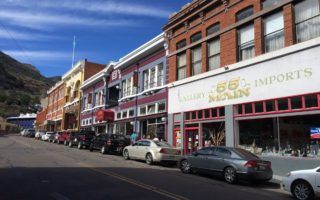
Jerome, AZ is an old mining town turned, vibrate artistic community and popular tourist destination—it’s one of those “off-the-beaten-path” type destinations that’s full of nooks, crannies and textures that just make you want to explore.  It’s a place where photographers of all levels will find exultation in.

Located high a top Cleopatra Hill at 5200′, Jerome provides sweeping views of Cottonwood and the red rock country of Sedona below. Founded in 1876, Jerome was once the 4th largest town in the Arizona Territory. The population once peaked at 15,000 and is now a mere 450.

In the late 60s, Jerome was designated a National Historic District. Today the area is a thriving tourist and artist community.   Being very centrally located, a stay in Jerome  makes for a great “home base” to explore the nearby areas of Cottonwood, Sedona and Prescott.

While in Jerome, you may want to check out the many unique shops, art galleries or saloons for some great music.

Click the following link to see more of my pictures of Jerome.  If you’ve been to Jerome before and/or know some hidden secrets or “must-do’s,” please post below. For more information on Jerome, check out the chamber website or the visitor website.

Hieroglyphic Canyon in the Superstition Mountains

Sunday, March 20th, 2011

The lure of the Superstition Mountains in the far east valley of the Phoenix Metro area is unmistakable.   For centuries this mountain range has been inhabited by Hohokam Indians, miners, cowboys, explorers and adventure seekers.  The most notably of them all was Jacob Waltz, also known as the Lost Dutchman.  Legend has it that Jacob Waltz discovered a rich gold mine, but died before telling anyone of its location.  People from around the world have come seeking that lost goldmine, many have paid with their lives.

There are many, many wonderful trails and excursions into the Superstition Mountains, I recommend a trail book by Jack Carlson called, “A Hiker’s Guide to the Superstition Wilderness.”  One of the easier hikes in the Superstition Wilderness, which offers amazing views, petroglyphs and seasonal water, is the Hieroglyphic Trail.  I would recommend allocating about 3 hours for this 2.5 miles round trip hike, that way you’ll have some time to enjoy the petroglyph area, or explore beyond.  Located about 45 miles east of Phoenix, you can click here for a map of how to get there (GPS coordinates below).

There is a fair amount of free parking available, however on the weekends during peak season, it can fill up. Although it’s called Hieroglyphic Canyon, what you’ll see are actually Hohokam petroglyphs. The distinction was unimportant to the miners and cowboys who roamed these parts of the Superstition Wilderness. There is often seasonal water to enjoy…and, after a good rainstorm, the area is transformed into a series of raging washes…it’s quite a sight to see.

For the more adventurous, you can choose to venture beyond the petroglyphs and follow the Hieroglyphic Canyon up to the Superstition Ridgeline. Anchored by a 5,000-foot peak at each end and a long connecting ridge in the middle, you’ll be treated with astounding views of Weaver’s Needle and the city below.

To see more of my pictures of the Hieroglyphic Canyon in the Superstition Wilderness, click here.

GPS Coordinates:
Lat: 33 23 23.589
Lat: -111 25  29.0454

If you’ve been on the Hieroglyphic trail before, post a comment below and let me and my readers know what ya thought.


A Look at the Superstition Mountain Museum

Monday, January 10th, 2011

The Superstition Mountain Museum is situated on twelve pristine acres at the base of its namesake, the Superstition Mountains.  Located just outside Apache Junction, Arizona, the Museum collects, preserves and displays history, artifacts and folklore of the surrounding areas.

The Superstition Mountains are most notably known for the Lost Dutchman Mine and that of its founder, Jacob Waltz. Lost in time, but not in spirit, the thought of lost gold in the Superstition Mountains attracts visitors from around the world.  The museum has many books, documents, artifacts and maps regarding the Lost Dutchman and his gold.  As a matter of fact, the museum is also known as the “Lost Dutchman Museum.”

If you’re not familiar with the “Lost Dutchman” story: “It is told a prospector named Jacob Waltz had a rich gold mine deep in the rugged mountains east of Apache Junction. The story tells of a German prospector who made periodic trips into the Superstition Mountains and returned to Phoenix with quantities of gold ore. This old prospector braved the dangers of the marauding Apaches prior to his 1886 surrender to Geronimo at Skeleton Canyon…” more…

The Superstition Mountain Museum has a number of structures on its property that house an array of different displays.  There is a 20-stamp ore crusher that used to process mining efforts, one of only a few remaining in the world. They also have a couple of surviving structures from Apacheland, an area western movie set that suffered a devastating fire back in 2004. One of the structures includes the “Elvis Chapel,” which Elvis himself as well as many other well-known actors once filmed.  A number of Elvis fans actually get married in the chapel each year and is a nice source of revenue for the Museum.

The Apacheland Barn houses a number of period western displays, like an ol’ saloon, a hardware store, horse tack & carriages and even a vintage parlor studio in which you can get your picture taken in vintage clothing.  Additional displays include a sheriff’s jail and stagecoach stop where visitors can take pictures of each other.

The Museum is open seven days a week, from 9am to 4pm.  Admission is only $5 for adults with discounts for seniors, students and kids.  There’s a gift shop and a number of events throughout the year, so check their website for more information: Superstition Mountain Museum

To see additional Pictures of the Superstition Mountain Museum, click here.

The Wonder and Mystique of Sedona, AZ

Friday, July 2nd, 2010

Sedona is one of those magical places that should be on everyone’s top-20 list of places to visit.  The brilliance of the red rock spires, the adventure of exploration,  the spiritual feeling one gets when meditating on the serene banks of Oak Creek…it’s just an amazing place.

There is so much to see and do in Sedona, from the various Jeep tours to meditation and walking tours. To shopping, gallery hopping, hiking, biking and dining at wonderful restaurants to playing in the crystal clear waters of Oak Creek in the Slide Rock state park.

Sedona has been a magnet for people of all walks of life…from those seeking adventure and beauty to a relaxing spa retreat, to those looking for a spiritual journey—trust me, Sedona accommodates your needs.

I have lived in Arizona off/on for most of my life and have been to Sedona countless times.  I’ve stayed at a variety of places, from hotels, B&B’s to timeshare condos and even camping out.  My favorite place is a place I’ve never even stayed, it’s called the Briar Patch Inn and it’s located on the most majestic stretch of Oak Creek Canyon that I think you’ll find.  Briar Patch Inn sits on a huge nine acre parcel, much of which is right on the banks of Oak Creek.  They have nineteen cabin/cottages with some wonderfully landscaped common areas that include hammocks,  creek-side table & chairs and pathways throughout…many leading down to the creek.

I’ve eaten at a number of restaurants in the Sedona area…many cater to the tourist crowd and are fine, but often over-priced for the quality.   A couple of places that stand out are just outside of the downtown area, D’Lish is a great vegetarian place on the West side.  If you like Thai food, there is a great (albeit small) place just south of downtown on 179 called Tara Thai. For a bit higher-end, try Fournos or L’ Auberge for wonderful creek-side dining. For breakfast, I love the Wildflower Bread Company, it sits atop the downtown area with wonderful patio views—they have the most scrumptious breakfasts with wonderful coffee and pastries.

Visitors to Sedona have a great choice of activities and sites to see. There are several world class golf courses and spas; adventurous, fun and educational jeep tours; ancient ruins; hiking and Mt.-biking trails that wind through what USA Today declared “The Most Beautiful Place in America.” In addition, Trip Advisor announced that Sedona won fifth place in its top-ten Travelers’ Choice US Destinations.

Tourists often find the following nearby attractions of interest:

Click the following link for additional pictures of Sedona.  You can also view my photo gallery for pictures of Slide Rock, Chapel of the Holy Cross and Oak Creek Canyon.