
Archive for the ‘ New Mexico ’ Category


Santa Fe “City Different” Walking Tour

Thursday, May 9th, 2013

I recently visited Santa Fe, New Mexico and stayed at the Santa Fe Sage Inn. During my stay I discovered they offer a “City Different” walking tour, which takes visitors to some of the landmark sights around downtown, as well as providing answers to many of those burning Santa Fe questions, for example:

  • Why are all the buildings brown?
  • Why the New Mexico State Capitol is called the “Roundhouse”?
  • Or what’s missing from the St. Francis Cathedral Basilica?
  • And, how/why Santa Fe became one of the top art destinations in the U.S.?

The Santa Fe “City Different” walking tour provides a historical and cultural orientation to the wonders of Santa Fe. The hour and half walking tour begins in the lobby of the Santa Fe Sage Inn each Thursday, Friday and Saturday at 9:45am and runs from early May through October 19th, 2013.


From the Santa Fe Sage Inn it’s just a short ride on the Sage Coach to the New Mexico State Capitol where the tour begins. The tour continues down old Santa Fe Trail, traveling through the historic Barrio de Analco, while viewing the San Miguel Mission and the Loretto Chapel, before arriving at the Santa Fe Plaza. There you will explore historic sites including, the St. Francis Cathedral Basilica and the 109 E. Palace. On the plaza you will learn about the Palace of the Governors, the New Mexico Museum of Art and the distinctive architecture that makes Santa Fe so unique. You’ll also learn about the role of Santa Fe’s three cultures… Native American, Hispanic and Anglo in the development of what is now the “City Different.”. This tour is a great opportunity to learn about the history of the nation’s oldest capital.

For more information on the Santa Fe “City Different” walking tour, contact:

Santa Fe Sage Inn
Phone: 505-982-5952
Email: SageInn@SantaFeSageInn.com
Fee: $12 per person

Santa Fe: A community so distinctive, it has its own style
Tuesday, January 10th, 2012

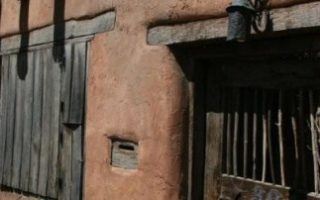
I’ve been to Santa Fe, New Mexico on several occasions, each time I visit I find something new to explore.  Santa Fe is a small community rich in history and culture, dating back some 400 years—its so distinctive that it has its own well-known style named for it…”Santa Fe Style.”  The colors, textures, tastes and smells of Santa Fe are bright, vibrant and inviting.

Santa Fe is a mecca for the creative, 100s of galleries, world-class museums, fantastic culinary scene—when you’re there, you can’t help but feel its overwhelming energy…it’s a feeling that envelop the soul.


Top Things to do while in Santa Fe:

  • Santa Fe Plaza – Located in the heart of downtown Santa Fe, the Plaza remains the focal point of the city, hosting various markets, festivals, gatherings, concerts and many annual events.
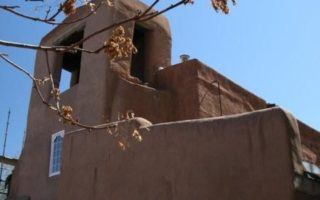
  • San Miguel Mission – This Spanish Colonial church is considered to be the country’s oldest, believed to have been built in 1628.
  • Cathedral Basilica of Saint Francis – This crowning achievement  was completed in 1886 and designed in Romanesque Revival style. While its design contrasts the surrounding adobe buildings, the cathedral remains one of Santa Fe’s most notable landmarks.
  • Art Galleries – There are well over 250 art galleries in Santa Fe, with a huge cluster in an area called “Canyon Road.”
  • The Railyard – Located just outside of downtown is the newly developed “Railyard,” which is a mix of new and old construction and still home to a rail depot transporting commuter passengers to/from Albuquerque.  Some good restaurants in the area too.  Last time I was there I enjoyed Tomasita’s, a Santa Fe institution.  I also ate at the Flying Star Cafe, which is in the newer part of the development and was pretty good.
  • While visiting Santa Fe, I would recommend taking an open air tram ride…this will give you a good overview of the downtown area and will allow you to get a lay-of-the-land so that you don’t end up walking in circles.  You’ll also be able to take notes of the spots you want to go back and further explore.

    There are a variety of cool destinations and things to see within a short drive from Santa Fe, so you could use the area as a hub while visiting places like Bandelier National Monument, Indian ruins and Pueblos, or perhaps Taos, which is at a higher elevation and offers skiing,  fishing and river rafting.  Taos is actually one of my favorite places of all time.

    There are many outstanding lodging accommodations in Santa Fe, I can recommend the El Farolito B&B, Don Gaspar Inn, Four Kachinas B&B and the Hotel Chimayo de Santa Fe.  Whether it’s art galleries, museums, history, culture or the culinary delights, there’s something for everyone in Santa Fe.  Santa Fe has become one of those “Must See” cities in the country and made my Mike’s Road Trip “Best of 2011” list for “Best Small City.”

    Click the following link to see more of my pictures of Santa Fe.  If you’ve been to Santa Fe before, please leave a comment below and let my readers and me know what you like best?  If you enjoyed this post and video, please click the “like” button and share it with friends and family.

Chaco Canyon, where the Spirits tell a story

Wednesday, October 12th, 2011

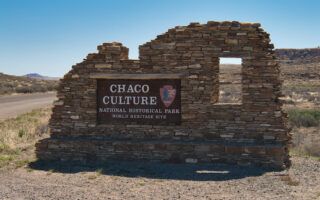
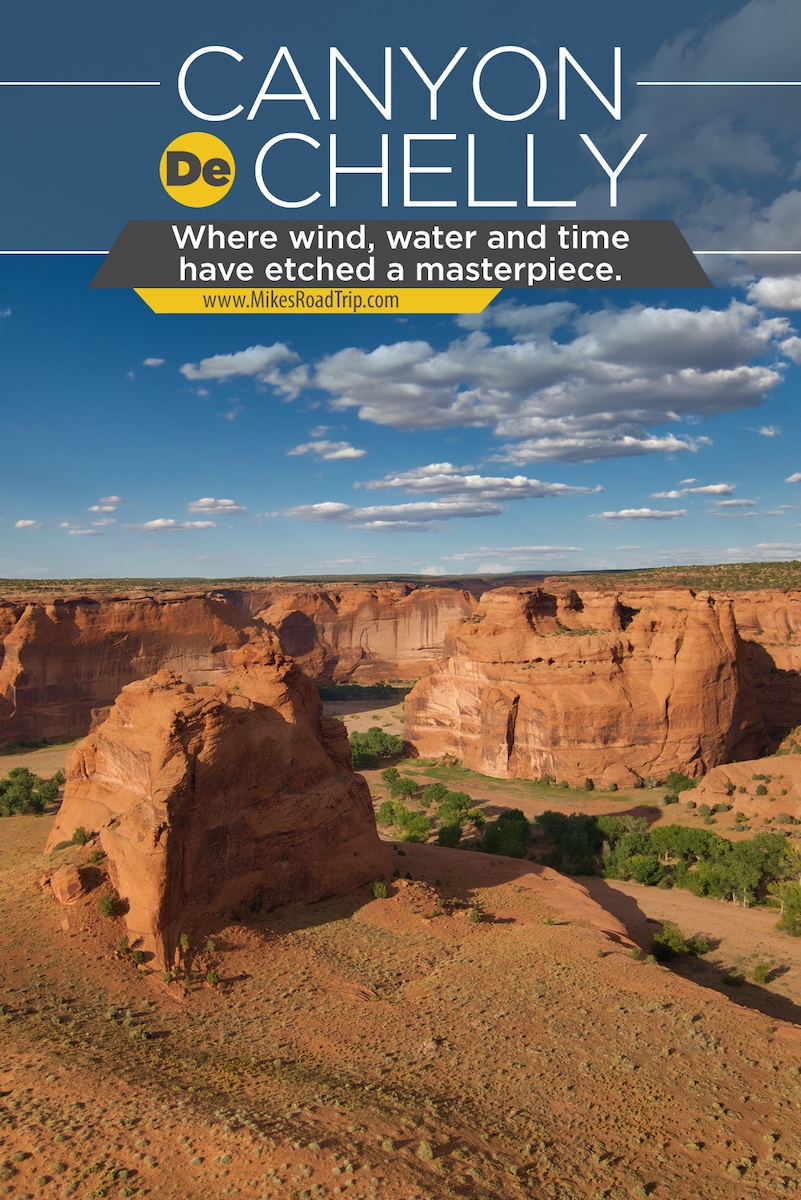
A few years ago I saw a documentary on the Chaco Culture National Historical Park…I was completely surprised that I’d never heard of this wondrous place before—after watching the documentary, I knew it was somewhere I had to go one day.  “One day” came this past May…here’s my adventure.

Coming from Santa Fe, I was working my way through New Mexico. Chaco Canyon is located in the northwester part of the state, near the “Four Corners” area. The elevation is around 6500′ and so the weather this time of year was absolutely perfect, maybe 80 for a high and 50s for a low.  As I neared the area of Chaco, taking several remote county roads, I began the arduous drive down a rough dirt road.  I knew I was in the right area, going in the right direction, but kept questioning how there could be a national park in an area this seemingly inaccessible.  After arriving at the visitors center, I learned that the road is not paved for a reason…they intentionally want to minimize the amount of people in the park to help preserve it.  It was a fairly rough journey, even in my four wheel drive truck, but let me tell you…so worth it.

Chaco Canyon is a special place for many reasons.  For one, it’s not that popular, so it’s a joy to explore without being inundated by crowds or traffic.   One of the reasons for the lack of tourists, as I mentioned, is the dirt road as you approach the park, however once inside Chaco, all the roads (except for the camp grounds) are paved. Chaco is remarkable for its multi-storied “Great Houses,” ceremonial structures and distinctive architecture.  The buildings of Chaco required considerable planning, designing, organizing of labor, and industrious engineering to construct. It’s a marvel like nothing I’ve seen before.  It’s also feels like a very spiritual place…very peaceful.


Chaco Canyon dates back from around 800 to 1150 AD, during that time the construction methods changed…quite significantly in fact.  I asked one of the park rangers about this and he told me they believe it was due to several factors…from technique evolution, to most likely…a change in available resources.  Because the surrounding land is so barren, one of the first questions I asked myself when I entered the park was, “where’s the water?” There was no water to be found anywhere…only seasonally. How did these people survive?  Initially archeologist thought that perhaps 1000 years ago there was water, but later concluded through research that this was not the case.  It’s still a mystery today how the Chacoans survived for more than three hundred years with so little water available.   The most obvious answer is that they created damns and other storage methods when it did rain, but on average this area only receives about 8″ per year.  As you look around, it’s really an inhospitable land…very little vegetation or wildlife to speak of.

Chaco Canyon was a major hub for trade and administration—unlike anything before or since. Something else I found fascinating was the fact that these people combined sophisticated architectural elements in their structures, from astronomical alignments, geometry, landscaping, and, complex engineering to create an ancient urban oasis.  The sheer size of Chaco is incredibly impressive.

As my first day of exploring was coming to an end, I made my way back to the camp area were I cooked up some grub and enjoyed some relaxing time in my hammock.  Because there are few trees to speak of, I had to get creative in how I hung the hammock.  After a good deal of contemplation, I was able to use two large boulders to affix my hammock straps (see video). As evening approached, bringing darkness with it, I headed over to the visitors center for an interpretive program put on by the park rangers. This was really really special…the rangers not only talk about the history of Chaco and many of the hypothesis’s, but  they also make available the observatory and telescopes for visitors to view one of the darkest skies in the country.  Because Chaco is so remote, there is little light pollution.  Just don’t go when there is a full moon like I did.  Even with the full moon, we were able to see many of the planets, the most impressive of which was Saturn.

The next morning I cooked up some breakfast, packed up camp and enjoyed one more siesta in my hammock before heading off to do some back-country exploring.  I climbed to the top of the northern wall of Chaco Canyon and enjoyed some amazing birds-eye views of the valley and structures below. I also found an area full of pottery shards…these pieces of history date back some 1000 years.

By mid-afternoon I was off to my next destination…Mesa Verde National Park.

Click the following link if you’d like to see more of my pictures of Chaco Canyon.

Chaco Canyon Information:

  • Be sure to fuel up before getting close to the park.
  • I recommend camping out for a night, it’s tough to fully appreciate the park in one day.  Plus, Chaco Canyon is one of the  least light-polluted places in the country and offers some spectacular star gazing opportunities.  And, several days per week the Park Rangers offer an astronomy and historical lecture.
  • If you’re camping out, you may want to consider bringing firewood.
  • Hours: 7:00 a.m. to sunset
  • Entrance Fee: only $8 per vehicle
  • Google Map: Click here

If you’ve been to Chaco Canyon before, please leave a comment below and tell my readers and me what you enjoy most. If you enjoyed this post and video, please click the “like” button and share it with your friends and family.

Bobbin’ around Bandelier

Saturday, September 10th, 2011

Bandelier National Monument is located just outside of Los Alamos, New Mexico and makes for a great day trip when visiting nearby Santa Fe.  The indigenous people that lived in the area dating back some 10,000 years, enjoyed the rugged arid landscape due in part to the the flowing streams and beautiful canyons.

Many of the ruins in Frijoles Canyon have been excavated, studied and preserved. The main loop trail from the visitor center passes by several types of restored dwellings, many of which welcome visitors to explore.  There are miles of trails, some are even paved to make a few of the sites more accessible.

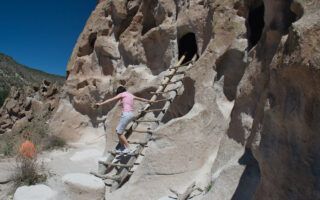
The highlight of the park for me was the trek to the “Alcove House,” which was about a 4-5 miles round trip, then required a 140 foot climb up a four tier series of ladders.  This climb is not for the faint-of-heart. I however find these things extremely exciting.  Unfortunately there was some sort of filed trip of kids at the park and I got caught in some pretty good congestion climbing both up and down.  Once reaching the top tier you enter a massive cliff dwelling with sweeping views of the canyon below.  There was also a kiva (an underground ceremonial structure) at the top, which visitors are allowed to enter and explore.

After retreating from the “Alcove House” and cluster of youngsters, I made my way to an area that provided some solace…the banks of the Frijoles Creek, which runs through the canyon with the same name.  There are 33,000 acres within the Bandelier park, plenty of space to enjoy and explore.

Bandelier National Monument is open year-round with late spring and summer being the busiest times, however at the time of writing this post, the park continues to be closed until further notice.  Just weeks after I visited Bandelier, there was a massive forest fire (The Las Conchas Fire) that unfortunately burned over 60% of the park, much of which is right in Frijoles Canyon where the visitors center resides.  One of the concerns is that the fire destroyed so much vegetation that the area is prone to flash flooding and is too dangerous to allow visitors.  This is very sad as Bandelier is certainly one of our national treasures.  Hopefully the park won’t be closed too long, but at this point it could be quite some time before visitors are allowed back.  Click here to check the status.

WikiTravel has created a wonderful outline of all the various information one could hope for to plan a trip to Bandelier. Click the following link if you’d like to see more of my pictures of Bandelier. If you’ve been to the Bandelier National Monument, please let my readers and me know what you like best.

If you found this post and video helpful and/or enjoyable, please click the “Like” button to share with friends and family.